The problem
Cochlear implants have transformed hearing for people with severe hearing loss, but the gap between implant users and normal hearing is still wide, and it has not closed the way the hardware has improved. A 2021 study out of Northwestern Feinberg put the difficulty starkly: participants with hearing disorders, given a limited set of words to choose from, picked the same word 53% of the time regardless of what they had actually heard.
That points at the coding strategy, the rule that turns incoming sound into a pattern of electrical stimulation, rather than at the electrodes. But coding strategies are hard to evaluate, because the usual measure is what a human subject reports hearing. I wanted a measure that reads the neural response directly.
What I built
A classification pipeline that takes raw multi-channel recordings from the inferior colliculus of four guinea pigs and predicts which of 53 spoken words produced them. The interesting decisions were mostly in the feature construction: how you turn a spike train into something a classifier can use without throwing away the timing information that carries the word.
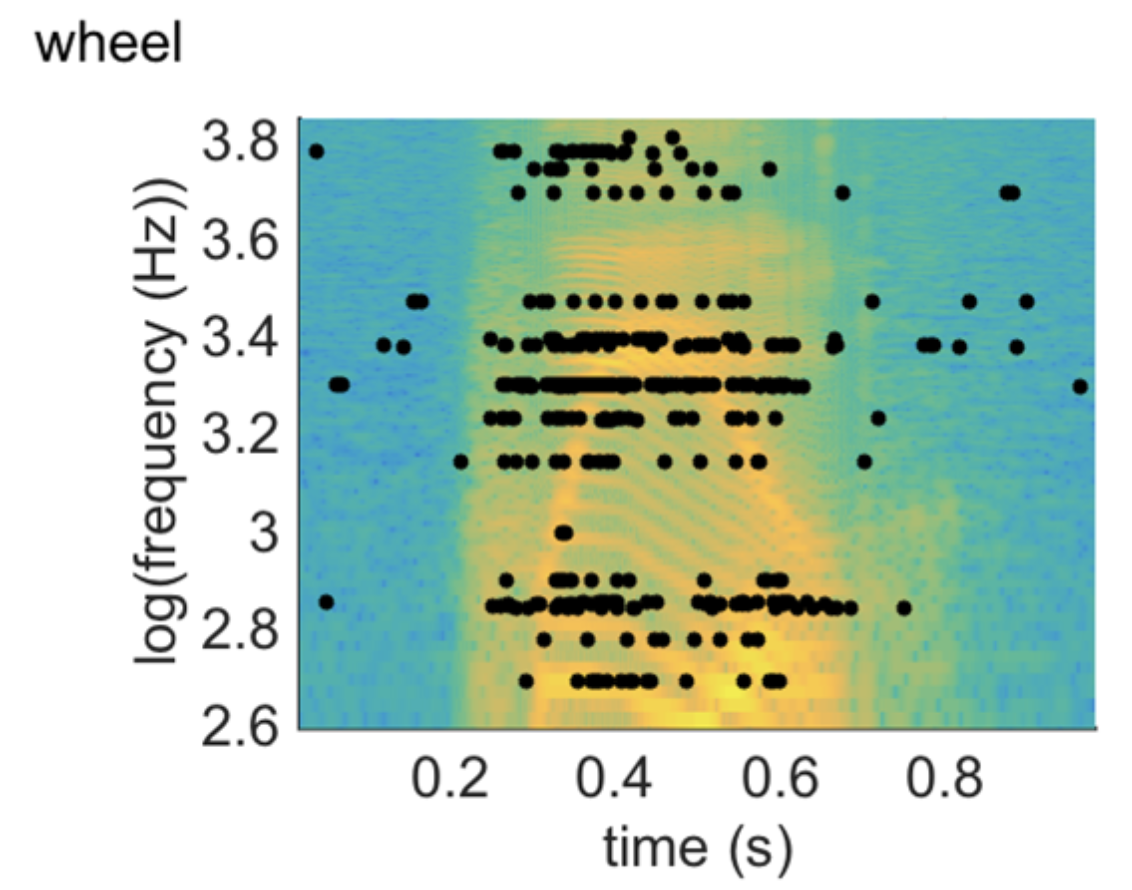
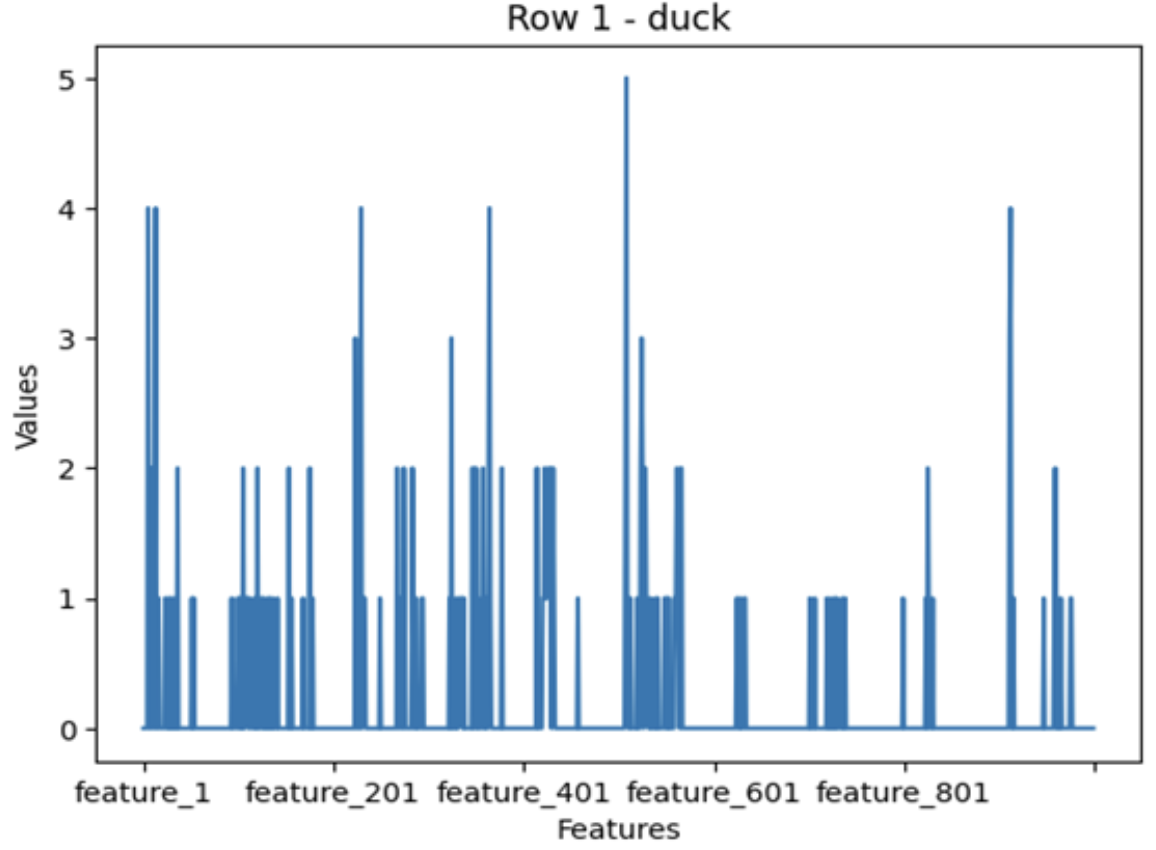
- Built the feature extraction: each neuron's recording holds the response to one word repeated ten times, so I split it into ten instances, divided each instance into t time-intervals, and counted peaks above a threshold in each interval, then concatenated those counts across all 20 neurons into a single vector.
- Chose an SVM over a deep model deliberately. The feature space is high-dimensional and the dataset is small; a neural network would have memorized it. With more recordings, that trade-off flips.
- Swept the parameters that define the representation rather than just the ones that define the model: bin counts of 100 and 200 time-intervals, frequency counts of 2, 4 and 10, thresholds of 0.05 and 0.06, RBF kernel, 10% held out for testing.
- Evaluated every pair of the 53 words separately and laid the results out as a confusion matrix, scoring with accuracy, precision, recall and F1 rather than accuracy alone.
What happened
The result that surprised me runs against the assumption in the field. Prior work suggests that increasing the number of frequency channels improves implant performance, but in our models, reducing the number of frequencies made word prediction more accurate. Distinguishing duck from bomb sat at 50% with ten frequencies and reached 100% with two, holding the threshold and bin count fixed. Coarsening the time bins hurt in the expected direction: goose versus june fell from 50% to 25% when I halved the number of intervals.
Our work suggests that a leaner feature set may give the classifier less noise to fit, which could translate to how many channels a coding strategy needs to be effective.